2023
Ampai
Brief
- Grew to approximately 12,000 users after incorporation in 2023.
- Adopted as the official scoring system for the Japan Professional Mahjong League, including World Mahjong 2025.
- Designed and built one system that works for casual games among friends and professional tournament operations.
PRODUCT
Ampai is a mahjong score tracking and sharing app. Incorporated in 2023, it has grown to approximately 12,000 users and has been adopted as the official scoring system for the Japan Professional Mahjong League, including their international tournament “World Mahjong 2025.”
I served as co-founder, handling technical direction, frontend development, and product planning — alongside back-office work in the early days.
ARCHITECTURE
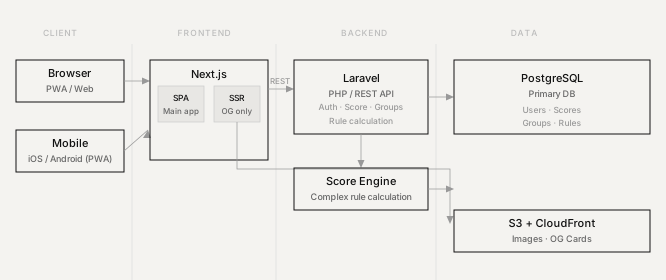
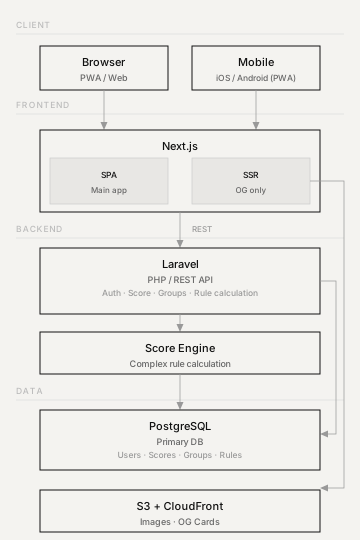
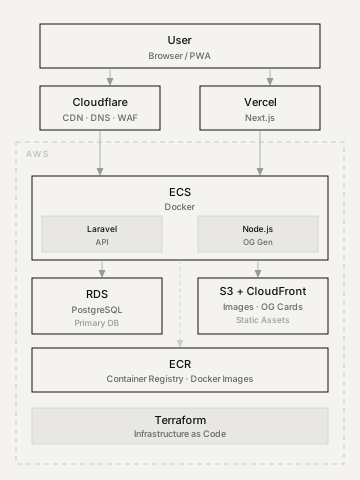
The frontend (Next.js), backend (Laravel), OG image generator (Node.js), and data stores (PostgreSQL / S3) are kept separate, so the same product can serve both casual games among friends and professional league operations.
INTERFACE
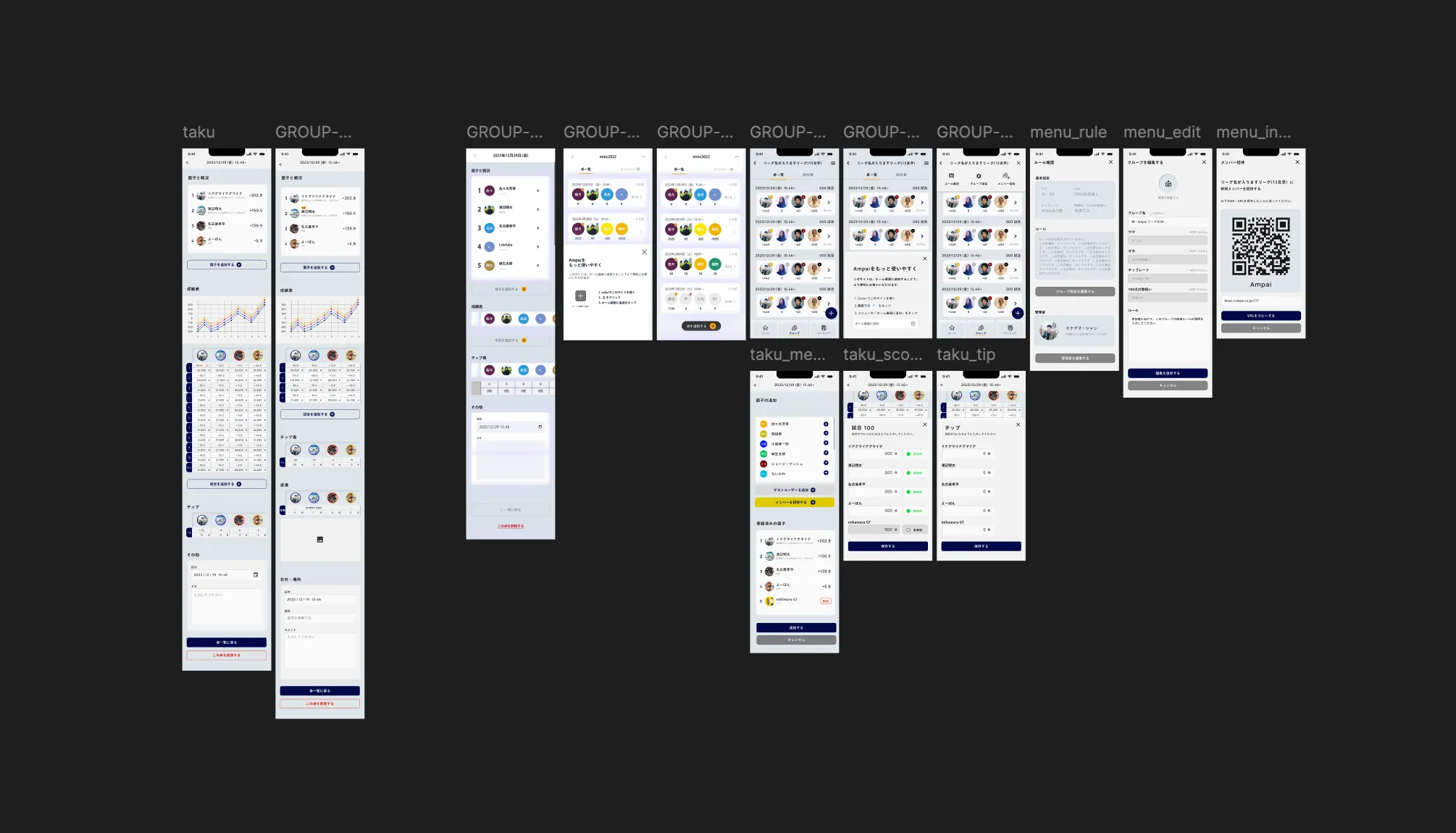
Mahjong scoring involves complex rules and multi-step input, so it is easy to lose track of where you are and what comes next. Ampai makes the next action clear on each screen so players can keep moving through the flow.
The group management UI takes its cue from LINE group chats: a familiar place where friends can manage scores together. New members can join from a QR code without creating an account first, which keeps setup light before a game starts.
Each member in the leaderboard appears with their icon or photo. Showing faces alongside names makes ranking changes easier to follow at a glance.
Rule setup is where first-time users often get stuck. Ampai includes templates for major rulesets including M.League, so a group can start from a known configuration and change details only when needed. Advanced players can still override settings without making the default path heavier.
INFRASTRUCTURE
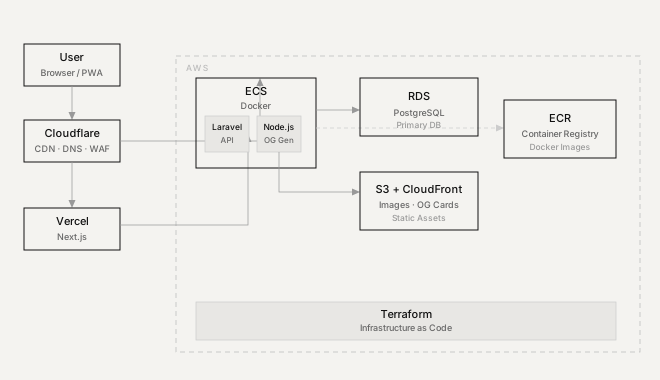
The same product that handles casual games among friends also powers professional league operations. Infrastructure is managed with Docker and Terraform on AWS, with Cloudflare handling delivery and security. PWA support lets people install it like an app without an App Store submission.
SHARING
Match results generate a dynamic OG image that players can share directly to X (Twitter) and other platforms. Being able to post results as an image has helped the app reach new players through word of mouth after real games.
Credits
- Technical Direction / Frontend / Infrastructure / Planning — Taisei Dofuku
- Co-founders — Undisclosed